Mon - Sat: 8:30-18:00

- Course
- CPR and AED
- Bloodborne Pathogens Training
- Babysitting Training
- First Aid
- Lifeguard Instructor
- Sexual Harassment Training
- Aquatic Supervisor
- Pool Activity Leader
- Emergency Oxygen
- Waterfront Lifeguarding
- Lifeguard Certification
- Shallow Water Lifeguard
- Waterfront Lifeguard
- Aquatic Attraction Lifeguard
- Surf Lifeguard
- Wilderness Lifeguard
- Junior Lifeguard
- Lifeguard Crash Course
- Lifeguard Recertification
- Lifeguard Management
- Aquatic Supervisor
- First Aid
- Water Swimming Instructor
- Pool Lifeguard
- Lifeguard Training
- Alabama
- Alaska
- Arkansas
- Arizona
- California
- Colorado
- Connecticut
- Delaware
- District Of Columbia
- Florida
- Georgia
- Guam
- Hawaii
- Idaho
- Illinois
- Indiana
- Iowa
- Kansas
- Kentucky
- Louisiana
- Maine
- Maryland
- Massachusetts
- Michigan
- Minnesota
- Mississippi
- Missouri
- Montana
- Nebraska
- Nevada
- New Hampshire
- New Jersey
- New Mexico
- New York
- North Carolina
- North Dakota
- Ohio
- Oklahoma
- Oregon
- Pennsylvania
- Puerto Rico
- Rhode Island
- South Carolina
- South Dakota
- Tennessee
- Texas
- Utah
- Vermont
- Virginia
- Washington
- West Virginia
- Wisconsin
- Wyoming
- Location
- Become an Instructor
- Verification
- Blog
- Contact Us
- Instructor Login
- My account
Lifeguard Certification Requirements by State Explained Clearly With Real-World Context
Last updated
Lifeguard Certification Requirements by State Explained Clearly refers to how each U.S. state defines prerequisites, in-person skill verification, certification validity, and employer acceptance standards while still following shared national safety expectations.
Why do lifeguard certification requirements vary by state?
States regulate aquatic safety differently based on facility type, population density, and historical risk. A beachfront operation faces different submersion risks than an indoor pool. While federal safety guidance shapes expectations, states determine enforcement thresholds and minimum qualifications.
In real-world training environments, employers often exceed state minimums to protect swimmers and reduce liability.
What prerequisites are commonly required nationwide?
Minimum age and swim competency
Most states require candidates to meet a minimum age and pass swim tests. These often include timed endurance swims, brick retrievals, and sustained treading.
What most students struggle with is maintaining vigilance and technique once fatigue sets in.
Medical readiness and documentation
Facilities may require health disclosures or fitness verification. From an employer review standpoint, missing paperwork can disqualify otherwise capable candidates.
Lifeguard Certification Requirements by State Explained Clearly
Across states, acceptable certification emphasizes hands-on skills such as rescue protocols, scanning techniques, emergency response coordination, and water chemistry basics.
Guidance from the
Occupational Safety and Health Administration (OSHA)
influences workplace safety expectations.
Public health recommendations from the
Centers for Disease Control and Prevention (CDC)
inform injury prevention and exposure response.
Aquatic facility standards often align with the
Model Aquatic Health Code (MAHC)
for operational consistency.
How long is lifeguard certification valid?
Certification validity periods
Certification validity typically ranges from one to two years depending on state acceptance and facility policy. High-risk environments may require shorter renewal cycles.
Skills retention expectations
Employers frequently conduct surprise drills to confirm readiness. Skills decay is a known risk without routine practice.
Why is in-person skills verification required?
Live skill assessment
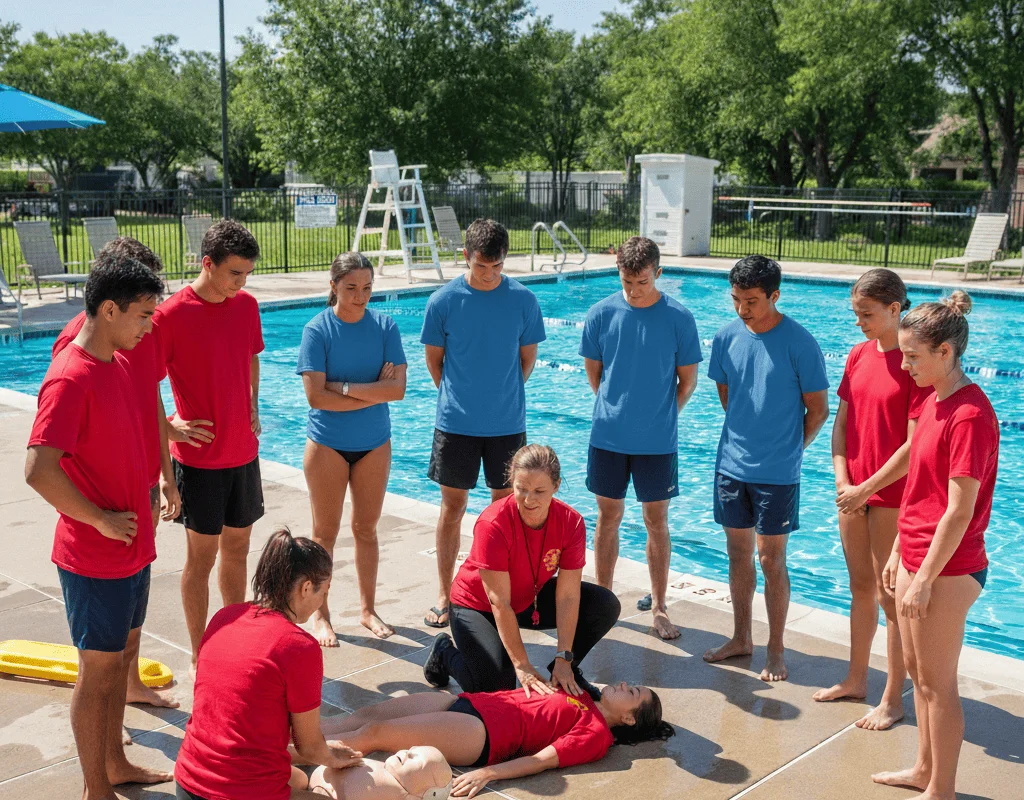
In-person verification confirms a lifeguard can perform rescues under pressure. Online-only lifeguard training programs are commonly a scam, and most employers do not accept online-only certifications.
If an online program does not list in-person training dates, do not sign up.
Team-based emergency response
Real incidents require coordination. Evaluations test communication, role clarity, and response timing.
For deeper detail, reference Lifeguard Skills Verification and confirm alignment with your facility.
How does recertification work across states?
Renewal timing
Recertification must be completed before expiration. Some states allow brief grace periods, but most employers do not.
Refresher focus areas
Renewals emphasize vigilance, submersion response, and updated safety procedures. Readers should review Lifeguard Recertification Requirements and verify employer acceptance before enrolling.
How long is certification valid?
Certification validity typically spans a fixed period, after which renewal is required to remain employable. Employers track expiration dates closely due to liability exposure. This is why Lifeguard Certification should be hyperlinked when explaining initial qualification pathways.
What does recertification involve?
Recertification focuses on skill retention, updated protocols, and performance verification. Lapsed credentials often require full retraining rather than a short renewal. When discussing renewal pathways, Lifeguard Recertification Online should be hyperlinked so readers can review requirements directly.
What do employers require before accepting lifeguard training?
From an employer review standpoint, acceptance hinges on three factors: documented hands-on training, alignment with current safety standards, and demonstrated competence during audits or drills. Facilities may reject credentials that lack transparency or practical assessment evidence.
How does proper hybrid training compare with industry minimums?
| Training Element | Proper Hybrid Training | Industry Minimum |
|---|---|---|
| Vigilance practice | Zone scanning under fatigue | Verbal explanation |
| Rescue scenarios | Multiple live simulations | Single demonstration |
| Emergency coordination | Team-based responses | Individual response |
| Skills documentation | Observed and recorded | Often unverified |
| Employer confidence | High | Variable |
What should a lifeguard job readiness checklist include?
- Confirm your state’s minimum prerequisites.
- Call your employer or facility to verify acceptance.
- Confirm in-person training dates are listed.
- Review certification validity and renewal timing.
- Ensure CPR and first aid are included.
- Retain all documentation for audits.
Are online-only lifeguard certifications accepted?
Most employers do not accept online-only certifications. Candidates must always call their employer or facility to confirm acceptance. If an online program does not list in-person training dates, do not enroll.
How employers evaluate certification acceptance
From an employer review standpoint, acceptance depends on documented in-person skills, verified assessments, and alignment with state rules. Programs aligned with **Lifeguard Training Requirements** consistently meet these expectations.
Certification audits and compliance
Facilities may be audited during inspections. Inspectors review certifications, drill records, and renewal documentation to confirm compliance with safety standards.
Frequently Asked Questions
What are Lifeguard Certification Requirements by State Explained Clearly?
Lifeguard Certification Requirements by State Explained Clearly explains how state rules govern prerequisites, in-person skills, validity, and employer acceptance. Lifeguard Certification Requirements by State Explained Clearly helps candidates choose training that facilities actually recognize.
Do all states require the same swim tests?
No. Swim tests vary by state and facility. Endurance, retrieval depth, and timing requirements adjust based on aquatic risk.
How often must lifeguards recertify?
Recertification frequency varies. Most employers require renewal before expiration and may mandate shorter cycles for high-risk facilities.
Are CPR and first aid always required?
Yes in practice. Employers expect integrated CPR and first aid training with scenario-based evaluation.
What skills must be verified in person?
Live rescues, spinal care, scanning techniques, and emergency coordination are verified hands-on.
How can I confirm employer acceptance?
Contact the facility directly and ask which certifications are accepted and how long they remain valid.
Do states inspect lifeguard credentials?
Yes. Inspections may review certifications, drills, and documentation for compliance.
Conclusion
Understanding Lifeguard Certification Requirements by State Explained Clearly prevents rejected credentials and unsafe shortcuts. State rules may differ, but employers consistently prioritize verified skills.
Following Lifeguard Certification Requirements by State Explained Clearly ensures acceptance, readiness, and safer aquatic environments.
Reviewed by Jackie Stern, Lifeguard Instructor, Firefighter and EMT. Jackie Stern has taught lifeguarding for more than 20 years and works as a firefighter, EMT and swim instructor. She reviews course content, prerequisites and rescue standards against current certification requirements.
About Us
We are a nonprofit that trains and certifies in Lifeguarding, Waterfront Lifeguarding, Junior Lifeguarding, Shallow Pool Lifeguarding, Sexual Harassment Training, CPR/AED, CPR for Lifeguards, First Aid Emergency Oxygen, and swimming lessons.
© Copyright American Aquatics and Safety Training. All Rights Reserved