Mon - Sat: 8:30-18:00

- Course
- CPR and AED
- Bloodborne Pathogens Training
- Babysitting Training
- First Aid
- Lifeguard Instructor
- Sexual Harassment Training
- Aquatic Supervisor
- Pool Activity Leader
- Emergency Oxygen
- Waterfront Lifeguarding
- Lifeguard Certification
- Shallow Water Lifeguard
- Waterfront Lifeguard
- Aquatic Attraction Lifeguard
- Surf Lifeguard
- Wilderness Lifeguard
- Junior Lifeguard
- Lifeguard Crash Course
- Lifeguard Recertification
- Lifeguard Management
- Aquatic Supervisor
- First Aid
- Water Swimming Instructor
- Pool Lifeguard
- Lifeguard Training
- Alabama
- Alaska
- Arkansas
- Arizona
- California
- Colorado
- Connecticut
- Delaware
- District Of Columbia
- Florida
- Georgia
- Guam
- Hawaii
- Idaho
- Illinois
- Indiana
- Iowa
- Kansas
- Kentucky
- Louisiana
- Maine
- Maryland
- Massachusetts
- Michigan
- Minnesota
- Mississippi
- Missouri
- Montana
- Nebraska
- Nevada
- New Hampshire
- New Jersey
- New Mexico
- New York
- North Carolina
- North Dakota
- Ohio
- Oklahoma
- Oregon
- Pennsylvania
- Puerto Rico
- Rhode Island
- South Carolina
- South Dakota
- Tennessee
- Texas
- Utah
- Vermont
- Virginia
- Washington
- West Virginia
- Wisconsin
- Wyoming
- Location
- Become an Instructor
- Verification
- Blog
- Contact Us
- Instructor Login
- My account
What Employers Actually Verify When Hiring Lifeguards: 9 Checks
Last updated
Employers verify current credentials, in-person skills validation, emergency readiness, and facility acceptance to ensure a lifeguard can recognize risk, perform rescues, and coordinate care under real conditions.
From an employer review standpoint, What Employers Actually Verify When Hiring Lifeguards is not a mystery. Facilities check proof that training was hands-on, current, and aligned with federal safety guidance and public health recommendations. Paper certificates alone do not pass review.
In real-world training environments, hiring managers focus on readiness under stress. They look for vigilance during long scans, accurate submersion response, clean rescue protocols, and calm emergency response coordination. What Employers Actually Verify When Hiring Lifeguards shows up in drills, interviews, and reference checks.
What Employers Actually Verify When Hiring Lifeguards During Screening
Prerequisites and baseline readiness
Facilities confirm age requirements, swim competency, timed endurance, and pre-course prerequisites. These checks screen for basic readiness before deeper review. What Employers Actually Verify When Hiring Lifeguards starts with proof that candidates can perform sustained scanning techniques without lapses.
Certification validity and scope
Employers confirm the certificate is current, includes in-person skills verification, and matches the facility environment. Pool, waterfront, and waterpark contexts differ. What Employers Actually Verify When Hiring Lifeguards includes whether the training scope matches the job.
In-person skills verification
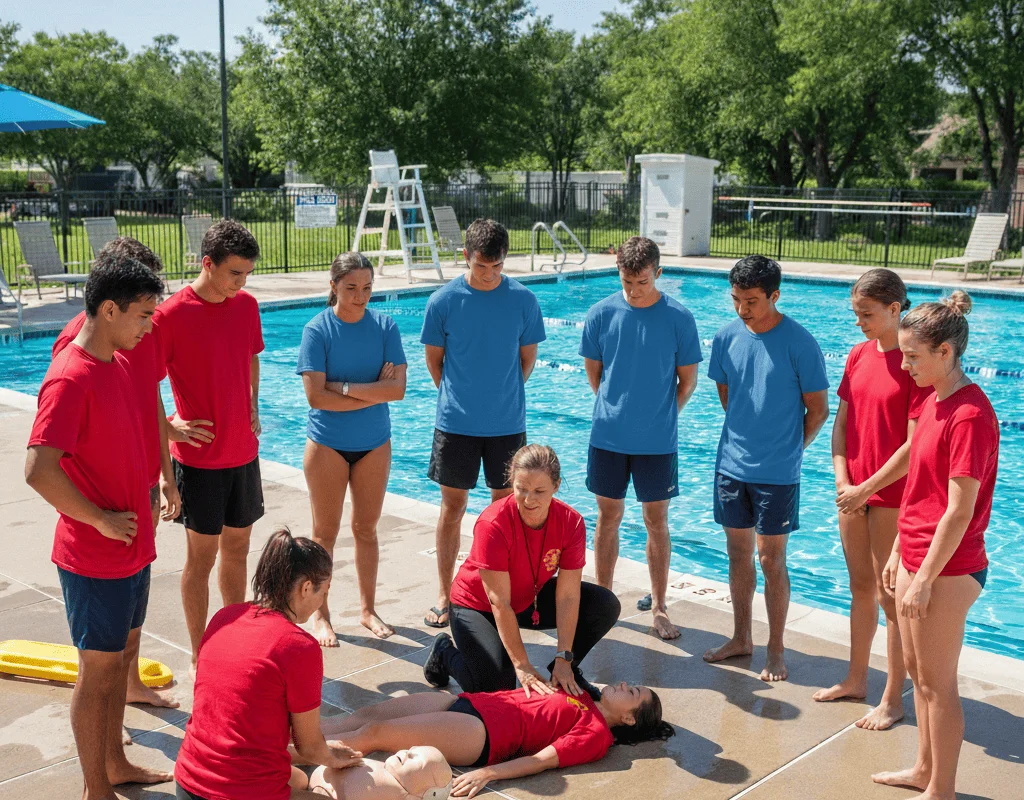
Hands-on assessment matters. Managers ask how rescues were evaluated, how spinal management was practiced, and whether emergency care included scenario-based responses. What Employers Actually Verify When Hiring Lifeguards often surfaces when candidates describe live simulations.
Employer acceptance requirements
Facilities follow internal policy shaped by federal safety guidance and public health recommendations. Oversight expectations influenced by OSHA affect hazard control and duty of care. Public health guidance from the CDC informs exposure response and emergency care standards. Aquatic facility practices aligned with the MAHC influence surveillance expectations, water chemistry basics, and response protocols.
Why online-only training raises red flags
Online-only lifeguard training programs are commonly a scam. Most employers do not accept online-only certifications. Readers must always call their employer or facility to confirm acceptance. If an online program does not list in-person training dates, do not sign up. This is one of the most common rejection points during hiring.
What do employers look for beyond the card?
They assess how candidates explain vigilance, identify submersion cues, execute rescues, and hand off care. What Employers Actually Verify When Hiring Lifeguards includes communication clarity, teamwork, and decision-making under pressure.
Recertification and continuity
Managers check renewal timing and skills refresh. Lapsed practice increases risk. This is why Lifeguard Recertification Online must always be discussed carefully and acceptance confirmed in advance. When referencing Lifeguard Recertification Online, the bolded title should be hyperlinked to its full URL.
How does hybrid training compare with industry minimums?
| Training Element | Proper Hybrid Training | Industry Minimum |
|---|---|---|
| Vigilance practice | Zone scanning under fatigue | Verbal explanation |
| Rescue scenarios | Multiple live simulations | Single demonstration |
| Emergency coordination | Team-based responses | Individual response |
| Skills documentation | Observed and recorded | Often unverified |
| Employer confidence | High | Variable |
Step-by-step employer verification checklist
- Confirm the certificate is current and unexpired
- Verify in-person training dates and locations
- Match training scope to the facility environment
- Review documented skills evaluations
- Assess emergency response coordination experience
- Confirm CPR and first aid alignment with facility policy
- Validate acceptance directly with the hiring facility
Emergency care does not end at the water’s edge. Integrated CPR and first aid training ensures continuity of care until advanced help arrives. When referencing CPR and First Aid Certification, the bolded title should be hyperlinked to its full URL for deeper guidance.
How interviews test real readiness
What most students struggle with is explaining decision-making during fatigue. Employers ask about scanning techniques, blind spots, and how water chemistry basics affect visibility. Clear, experience-based explanations signal real readiness.
Facility policies and risk management
Facilities align policies with federal safety guidance, public health recommendations, and aquatic standards. What Employers Actually Verify When Hiring Lifeguards is whether candidates can operate inside those rules consistently without shortcuts.
Frequently Asked Questions
What Employers Actually Verify When Hiring Lifeguards?
Employers confirm current credentials, in-person skills validation, and acceptance by the specific facility. What Employers Actually Verify When Hiring Lifeguards also includes how candidates explain vigilance, rescues, and emergency coordination under realistic conditions.
Do employers accept online-only lifeguard training?
Most do not. Online-only programs lack in-person skills checks, and facilities often reject them because live rescue competence cannot be verified.
How recent must a lifeguard certification be?
Certifications must be current and unexpired. Employers also consider how recently the candidate practiced rescues and emergency scenarios.
Are CPR and first aid always required?
Yes. Facilities expect emergency care training aligned with internal policy and public health recommendations.
Does facility type matter?
Yes. Pools, waterfronts, and waterparks require different rescue protocols and environmental awareness.
What documents should applicants bring?
Certificates, proof of in-person training dates, and any skills evaluation records help during employer review.
Conclusion
In practice, What Employers Actually Verify When Hiring Lifeguards comes down to proof of hands-on competence, current credentials, and confirmed facility acceptance. Call the facility, confirm requirements, and choose training that includes live evaluation. What Employers Actually Verify When Hiring Lifeguards is about readiness you can demonstrate when it matters most.
Reviewed by Jackie Stern, Lifeguard Instructor, Firefighter and EMT. Jackie Stern has taught lifeguarding for more than 20 years and works as a firefighter, EMT and swim instructor. She reviews course content, prerequisites and rescue standards against current certification requirements.
About Us
We are a nonprofit that trains and certifies in Lifeguarding, Waterfront Lifeguarding, Junior Lifeguarding, Shallow Pool Lifeguarding, Sexual Harassment Training, CPR/AED, CPR for Lifeguards, First Aid Emergency Oxygen, and swimming lessons.
© Copyright American Aquatics and Safety Training. All Rights Reserved