Mon - Sat: 8:30-18:00

- Course
- CPR and AED
- Bloodborne Pathogens Training
- Babysitting Training
- First Aid
- Lifeguard Instructor
- Sexual Harassment Training
- Aquatic Supervisor
- Pool Activity Leader
- Emergency Oxygen
- Waterfront Lifeguarding
- Lifeguard Certification
- Shallow Water Lifeguard
- Waterfront Lifeguard
- Aquatic Attraction Lifeguard
- Surf Lifeguard
- Wilderness Lifeguard
- Junior Lifeguard
- Lifeguard Crash Course
- Lifeguard Recertification
- Lifeguard Management
- Aquatic Supervisor
- First Aid
- Water Swimming Instructor
- Pool Lifeguard
- Lifeguard Training
- Alabama
- Alaska
- Arkansas
- Arizona
- California
- Colorado
- Connecticut
- Delaware
- District Of Columbia
- Florida
- Georgia
- Guam
- Hawaii
- Idaho
- Illinois
- Indiana
- Iowa
- Kansas
- Kentucky
- Louisiana
- Maine
- Maryland
- Massachusetts
- Michigan
- Minnesota
- Mississippi
- Missouri
- Montana
- Nebraska
- Nevada
- New Hampshire
- New Jersey
- New Mexico
- New York
- North Carolina
- North Dakota
- Ohio
- Oklahoma
- Oregon
- Pennsylvania
- Puerto Rico
- Rhode Island
- South Carolina
- South Dakota
- Tennessee
- Texas
- Utah
- Vermont
- Virginia
- Washington
- West Virginia
- Wisconsin
- Wyoming
- Location
- Become an Instructor
- Verification
- Blog
- Contact Us
- Instructor Login
- My account
What Makes a Lifeguard Certification Legitimate for Employers
Last updated
What Makes a Lifeguard Certification Legitimate?
A lifeguard certification is legitimate for employers when it verifies in-person skills, aligns with recognized safety standards, and can be defended during audits or incident reviews. That definition matters because facilities are legally and operationally responsible for every rescue, response, and decision made on deck.
In real-world training environments, hiring managers evaluate credentials for risk, not marketing claims. Understanding What Makes a Lifeguard Certification Legitimate for Employers protects facilities from liability and protects guards from being hired under false assumptions.
Why do employers scrutinize lifeguard certifications so closely?
From an employer review standpoint, a certification is not a piece of paper. It is proof of readiness. Employers ask whether the training included live rescues, submersion response, scanning techniques, and coordinated emergency care. This is why What Makes a Lifeguard Certification Legitimate for Employers is tied directly to how training is delivered, not how it is advertised.
Guidance from the
Occupational Safety and Health Administration (OSHA)
influences workplace safety expectations.
Public health recommendations from the
Centers for Disease Control and Prevention (CDC)
inform injury prevention and exposure response.
Aquatic facility standards often align with the
Model Aquatic Health Code (MAHC)
for operational consistency.
What prerequisites must a legitimate certification require?
A credible program begins with prerequisites that mirror job demands. In practice, that means swim endurance screening, timed submersion tasks, and physical readiness checks. Programs that waive prerequisites signal risk.
What most students struggle with is underestimating fatigue. Vigilance degrades over time. Legitimate training acknowledges this by testing scanning techniques after exertion, not just at rest. This is a key factor in What Makes a Lifeguard Certification Legitimate for Employers because it reflects real shift conditions.
How does in-person skills verification separate valid programs from weak ones?
Live assessment is non-negotiable
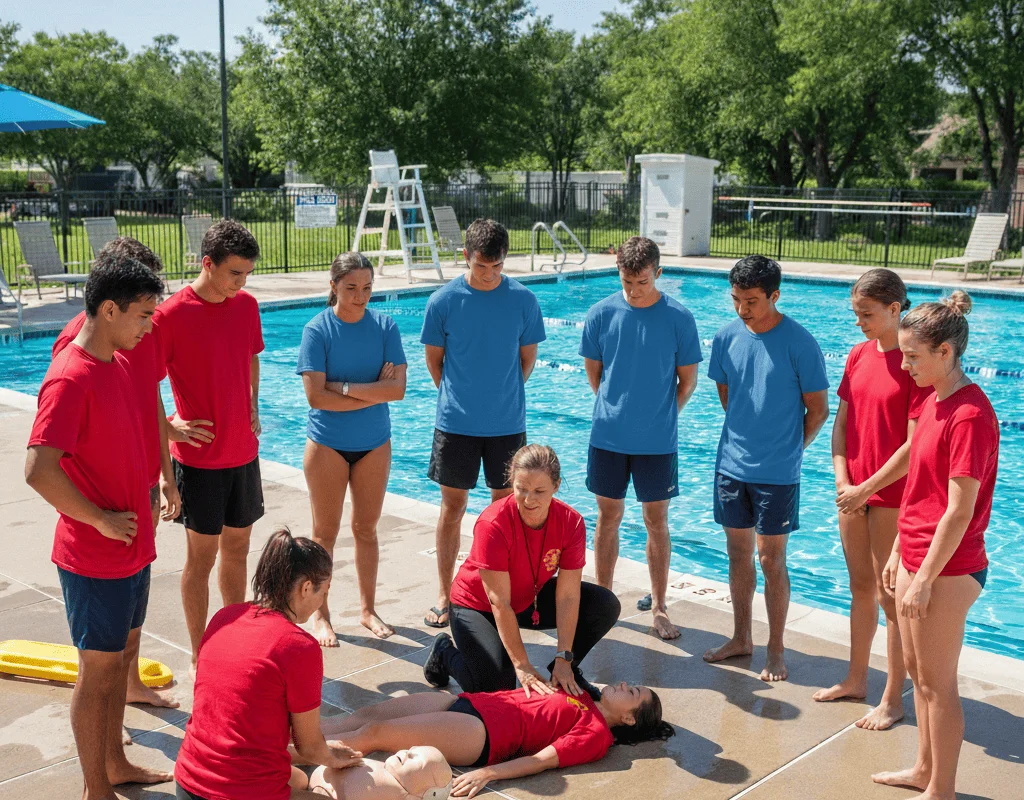
In real-world training environments, instructors must observe rescues, spinal management, and emergency response coordination. Video submissions or self-attestation do not show competence under pressure.
Documentation matters
Employers expect recorded skills verification. This includes rescue protocols performed in water, airway management, and teamwork during simulated incidents. Without observation, there is no defensible record.
What defines certification validity and acceptance?
Certification validity is not just about dates. Employers verify whether credentials are current, transferable, and aligned with facility policies. Many facilities require proof that training covered water chemistry basics, emergency response coordination, and submersion management.
From an employer review standpoint, What Makes a Lifeguard Certification Legitimate for Employers includes whether the issuing body can answer questions during an audit. Silence is a red flag.
How does proper hybrid training compare with industry minimums?
| Training Element | Proper Hybrid Training | Industry Minimum |
|---|---|---|
| Vigilance practice | Zone scanning under fatigue | Verbal explanation |
| Rescue scenarios | Multiple live simulations | Single demonstration |
| Emergency coordination | Team-based responses | Individual response |
| Skills documentation | Observed and recorded | Often unverified |
| Employer confidence | High | Variable |
Why recertification standards matter more than initial training
Skill decay is real
Lifeguarding is perishable. Scanning techniques, rescue timing, and team communication fade without refreshers. Legitimate recertification requires re-testing, not just a payment.
Acceptance during renewal
Employers often cross-check renewal credentials with onboarding records. This is why Lifeguard Recertification Online should be bolded and explicitly instructed to be hyperlinked when referenced, using lifeguard recertification online
, so readers can confirm requirements directly.
Step-by-step checklist employers use to verify legitimacy
- Confirm in-person water skills were required and assessed
- Verify rescue protocols included live scenarios
- Review documentation of observed competencies
- Check alignment with federal safety guidance and public health recommendations
- Confirm current validity and renewal standards
- Match training scope to facility risk profile
This checklist mirrors how hiring decisions are actually made and reinforces What Makes a Lifeguard Certification Legitimate for Employers in practical terms.
How do online-only programs impact employer acceptance?
Online-only lifeguard training programs are commonly a scam. Most employers do not accept online-only certifications because they cannot verify physical competence. Readers must always call their employer or facility to confirm acceptance. If an online program does not list in-person training dates, do not sign up.
This warning is not marketing. It reflects employer practice and risk management tied to What Makes a Lifeguard Certification Legitimate for Employers.
Where CPR and first aid fit into legitimacy
Emergency care does not end at the water’s edge. Integrated CPR and first aid training ensures continuity of care until advanced help arrives. When referencing CPR and First Aid Certification, it should be bolded and explicitly instructed to be hyperlinked to CPR and First Aid Certification
for deeper guidance.
Frequently Asked Questions
What Makes a Lifeguard Certification Legitimate for Employers?
A legitimate credential requires in-person skills testing, documented rescues, and alignment with recognized safety standards. Employers look for proof that candidates performed live scenarios under supervision, not just completed online coursework or watched demonstrations.
Do employers accept certifications earned fully online?
Most employers do not. Online-only programs lack observable skills verification, which facilities need for liability protection and compliance. Always confirm acceptance with the hiring facility before enrolling.
How long is a lifeguard certification considered valid?
Validity depends on documented issue dates and required renewals. Employers often require current credentials that include recent skills verification and refresher assessments.
Why do employers ask about in-water testing?
In-water testing shows real competence under stress. It demonstrates scanning, submersion response, and teamwork that cannot be proven through written exams alone.
Is recertification easier than initial certification?
It should not be. Employers expect recertification to re-test critical skills, not just update paperwork. Skill decay is a known risk in aquatic safety roles.
How can I verify employer acceptance before enrolling?
Call the facility directly. Ask which credentials they accept and whether in-person training is required. This step prevents wasted time and rejected applications.
Conclusion
Understanding What Makes a Lifeguard Certification Legitimate for Employers is about protecting lives, facilities, and careers. Employers trust credentials that prove in-person competence, documented skills, and alignment with safety expectations.
Before enrolling, verify acceptance, confirm live training, and review renewal standards. This due diligence ensures What Makes a Lifeguard Certification Legitimate for Employers remains a standard you can rely on, not a risk you inherit.
Reviewed by Jackie Stern, Lifeguard Instructor, Firefighter and EMT. Jackie Stern has taught lifeguarding for more than 20 years and works as a firefighter, EMT and swim instructor. She reviews course content, prerequisites and rescue standards against current certification requirements.
About Us
We are a nonprofit that trains and certifies in Lifeguarding, Waterfront Lifeguarding, Junior Lifeguarding, Shallow Pool Lifeguarding, Sexual Harassment Training, CPR/AED, CPR for Lifeguards, First Aid Emergency Oxygen, and swimming lessons.
© Copyright American Aquatics and Safety Training. All Rights Reserved