Mon - Sat: 8:30-18:00

- Course
- Lifeguard Training
- Alabama
- Alaska
- Arkansas
- Arizona
- California
- Colorado
- Connecticut
- Delaware
- District Of Columbia
- Florida
- Georgia
- Guam
- Hawaii
- Idaho
- Illinois
- Indiana
- Iowa
- Kansas
- Kentucky
- Louisiana
- Maine
- Maryland
- Massachusetts
- Michigan
- Minnesota
- Mississippi
- Missouri
- Montana
- Nebraska
- Nevada
- New Hampshire
- New Jersey
- New Mexico
- New York
- North Carolina
- North Dakota
- Ohio
- Oklahoma
- Oregon
- Pennsylvania
- Puerto Rico
- Rhode Island
- South Carolina
- South Dakota
- Tennessee
- Texas
- Utah
- Vermont
- Virginia
- Washington
- West Virginia
- Wisconsin
- Wyoming
- Location
- Become an Instructor
- Verification
- Blog
- Contact Us
- Instructor Login
- My account
Lifeguard instructor course with verified national standards
Last updated
A lifeguard instructor course is a professional training pathway that prepares experienced lifeguards to teach, evaluate, and document lifesaving skills according to recognized safety expectations while overseeing in-person skill verification and employer-accepted certification processes.
What does a lifeguard instructor course actually qualify you to do?
In real-world training environments, this pathway authorizes qualified candidates to teach lifeguard students, conduct skill evaluations, and verify readiness for employment. A lifeguard instructor course goes beyond personal rescue ability. It focuses on teaching methodology, observation accuracy, documentation, and consistency across multiple trainees.
From an employer review standpoint, instructors are expected to align with federal safety guidance and public health recommendations. Oversight bodies such as Occupational Safety and Health Administration influence expectations for emergency preparedness, while guidance from the Centers for Disease Control and Prevention shapes emergency response planning in aquatic settings. Facility benchmarks reinforced by the Model Aquatic Health Code further emphasize the need for instructor-led, in-person skills verification.
Prerequisites before enrolling
Before enrolling, candidates must already meet baseline professional requirements. What most students struggle with is underestimating the instructional responsibility compared to personal performance.
Typical prerequisites include current lifeguard certification in good standing, verified CPR and first aid competency, strong swim endurance and submersion comfort, demonstrated vigilance and scanning techniques, and prior on-deck experience supervising patrons. Many facilities also require proof of recent employment or participation in documented in-service training.
How is in-person skills verification handled?
In a lifeguard instructor course, skills verification is mandatory. Instructors must demonstrate the ability to observe, correct, and retest student performance in real time. Evaluation includes rescue protocols under fatigue, multiple-victim scenarios, emergency response coordination, accurate recognition of distress and submersion events, and water chemistry basics tied directly to safety awareness.
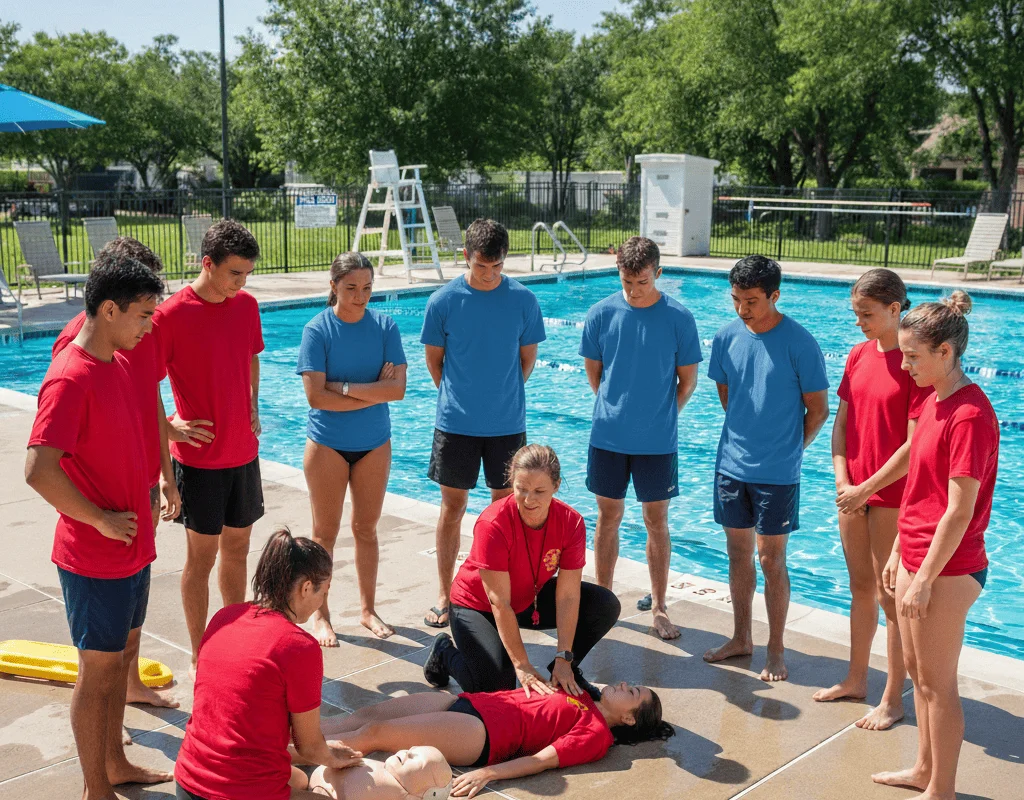
How does proper hybrid training compare with industry minimums?
| Training Element | Proper Hybrid Training | Industry Minimum |
|---|---|---|
| Teaching practice | Live student instruction | Observation only |
| Rescue evaluation | Multiple scenario assessments | Single demonstration |
| Vigilance testing | Zone scanning under load | Verbal explanation |
| Documentation | Recorded and reviewed | Often unverified |
| Employer acceptance | High | Variable |
In real facilities, employers consistently favor programs that exceed minimum thresholds.
Certification validity and professional responsibility
Certification earned through a lifeguard instructor course is time-limited to ensure instructors remain aligned with evolving safety expectations. Instructors are responsible for maintaining active status, completing recertification, staying current with emergency response guidance, and ensuring that students meet employer acceptance requirements.
Recertification requirements explained
Recertification focuses on instructional accuracy rather than personal rescue ability alone. It reinforces updated rescue protocols, scanning techniques, emergency response coordination, and documentation practices to ensure consistent instruction across training cycles.
What employer acceptance requirements must my training meet?
From an employer review standpoint, acceptance hinges on verifiable training structure. Employers routinely confirm in-person training completion, documented skill testing, instructor qualifications, and alignment with recognized safety expectations. This is why graduates taught under a properly structured lifeguard instructor course experience higher acceptance rates.
What should I check before enrolling in a training program?
- Confirm your current lifeguard certification status
- Verify recent in-water work experience
- Confirm in-person training dates are clearly listed
- Ask how skills are evaluated and documented
- Contact employers to confirm instructor credential acceptance
- Review recertification expectations
If an online program does not list in-person training dates, do not sign up.
Online-only programs and acceptance risks
Online-only lifeguard training programs are commonly a scam. Most employers do not accept online-only certifications. Readers must always call their employer or facility to confirm acceptance before enrolling. If an online program does not list in-person training dates, do not sign up.
How this pathway connects to broader lifeguard training
Instructors trained through this pathway often oversee advanced training programs and supervise candidates progressing toward higher responsibility roles. Many also review pathways tied to
online lifeguard certification requirements
, while reinforcing employer expectations outlined during
lifeguard training
to ensure all participants complete required in-person skills verification and employer-accepted evaluations.
Frequently Asked Questions
What is a lifeguard instructor course?
A lifeguard instructor course prepares experienced lifeguards to teach, evaluate, and document lifesaving skills. A lifeguard instructor course emphasizes instructional accuracy, in-person verification, and employer-accepted standards rather than personal rescue ability alone.
How long does instructor training usually take?
Most programs require several days of instruction plus in-water evaluations. Time commitments vary based on prior experience, teaching practice hours, and assessment completion requirements.
Do employers accept instructor certifications earned online?
A lifeguard instructor course completed without in-person training is rarely accepted. Employers typically require documented live skill verification and teaching evaluations aligned with recognized safety expectations.
Is prior teaching experience required?
Formal teaching experience is not always required, but strong communication skills and on-deck leadership are essential. Many candidates underestimate the instructional demands involved.
How often must instructors recertify?
Recertification intervals vary but are designed to ensure instructors remain current with rescue protocols, vigilance expectations, and emergency response coordination practices.
Can instructors certify lifeguards anywhere?
Instructors may teach where employers accept their credentials. Facility policies, liability considerations, and regulatory expectations influence acceptance decisions.
Conclusion
A lifeguard instructor course is a professional responsibility, not just an upgrade. It requires teaching precision, real-time evaluation, and adherence to recognized safety expectations. For long-term leadership roles in aquatic facilities, a lifeguard instructor course remains the pathway employers trust when properly completed.
Reviewed by Jackie Stern, Lifeguard Instructor, Firefighter and EMT. Jackie Stern has taught lifeguarding for more than 20 years and works as a firefighter, EMT and swim instructor. She reviews course content, prerequisites and rescue standards against current certification requirements.
About Us
We are a nonprofit that trains and certifies in Lifeguarding, Waterfront Lifeguarding, Junior Lifeguarding, Shallow Pool Lifeguarding, Sexual Harassment Training, CPR/AED, CPR for Lifeguards, First Aid Emergency Oxygen, and swimming lessons.
© Copyright American Aquatics and Safety Training. All Rights Reserved