Mon - Sat: 8:30-18:00

Last updated
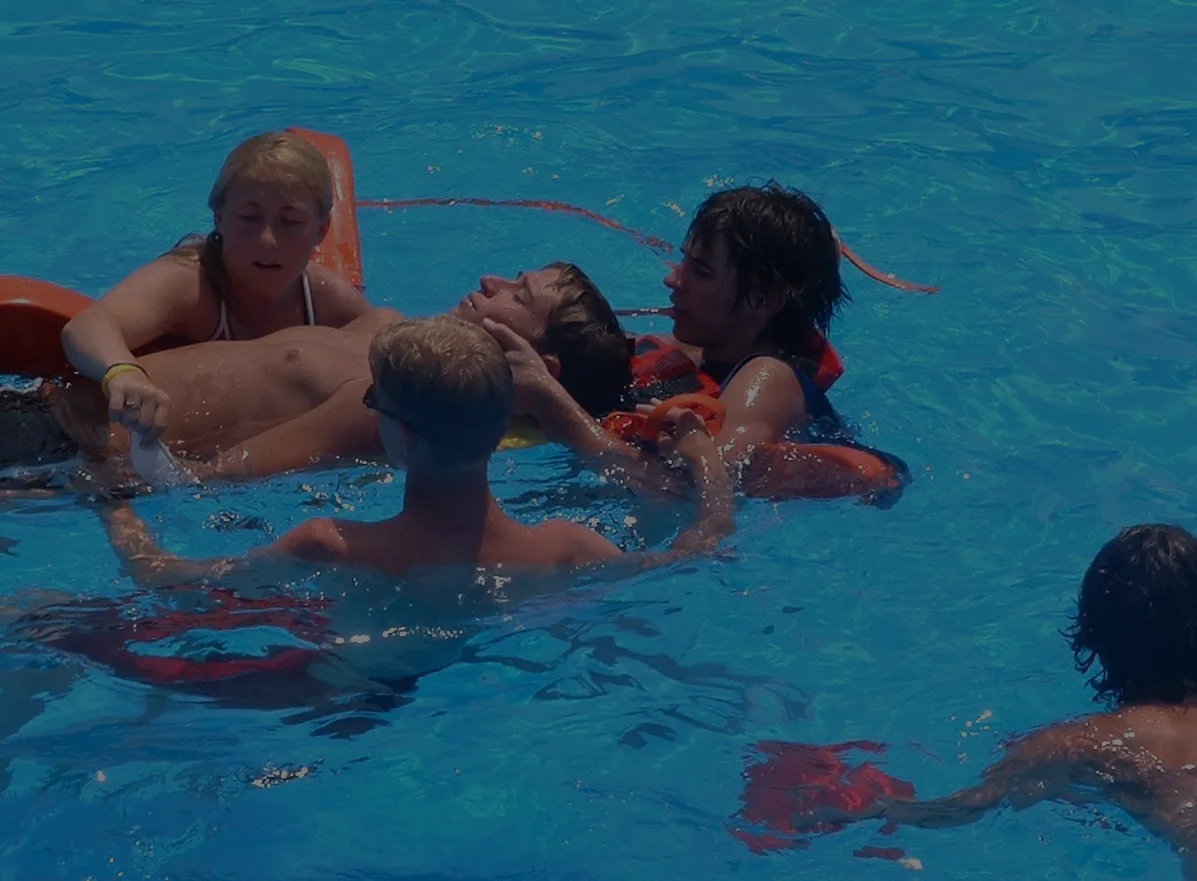
American Aquatics and Safety Training runs a nationally recognized lifeguard certification course starting at $195. It is blended: you work through the coursework online at your own pace, then attend in-person sessions where your rescue skills and swimming are assessed. Pass, and you hold Lifeguarding, CPR/AED for the Professional Rescuer and First Aid for two years.
Lifeguard certification at a glance
- Cost
- Starting at $195.00 per participant, with group discounts available.
- Course length
- 7.5 hours of online training plus 2 days in person.
- Minimum age
- Be at least 15 years old by the last day of class.
- Swim test
- Swim 300 yards continuously using front crawl and breaststroke; tread water for 2 minutes without using arms; and retrieve a 10-lb brick from 7 to 10 feet of water and swim it back within 1 minute, 40 seconds.
- Certifications
- Lifeguarding, CPR/AED for the Professional Rescuer, and First Aid.
- Valid for
- Two years from the date of issue. Recertification is 10 hours of in-person training.
- Format
- Blended: online coursework completed at your own pace, then in-person skills sessions.
How to get your lifeguard certification
- Pick where you want to train. The in-person sessions are held locally, so start from your state and choose the class that suits your dates.
- Book your place and complete the online coursework. You can work through it at your own pace before the in-person days, on any device.
- Attend the in-person sessions. This is where rescues, spinal management, CPR/AED and first aid are taught and practiced in the water.
- Pass the prerequisite swim test and the final assessment. The swim standards are listed above, and instructors assess your response under real conditions.
- Receive your certification. It is valid for two years, and recertifying later is shorter than starting again.
Lifeguard certification proves you can prevent, recognize and respond to aquatic emergencies. It requires a prerequisite swim test and training in water rescue, CPR/AED and first aid, and stays valid for two years.

Accreditation
In addition, American Aquatics and Safety Training is approved by the Council for the Model Aquatic Health Code (CMAHC), which is supported by the Centers for Disease Control and Prevention (CDC). The CMAHC develops science-based standards for aquatic health and safety, helping set national guidelines for drowning prevention, waterborne disease control, and risk reduction in pools and aquatic facilities.
Being CMAHC-approved means that our lifeguard training programs follow evidence-based best practices that align with CDC recommendations. This approval provides an extra layer of trust and assurance for organizations, employers, and individuals who choose our lifeguard certification and safety training.
Where to take your lifeguard certification
In-person sessions run across the country. Choose your state to see class locations, dates and what the course covers there.
- Lifeguard Class in Alabama
- Lifeguard Class in Alaska
- Lifeguard Class in Arizona
- Lifeguard Class in Arkansas
- Lifeguard Class in California
- Lifeguard Class in Colorado
- Lifeguard Class in Connecticut
- Lifeguard Class in District of Columbia
- Lifeguard Class in Florida
- Lifeguard Class in Georgia
- Lifeguard Class in Hawaii
- Lifeguard Class in Idaho
- Lifeguard Class in Illinois
- Lifeguard Class in Indiana
- Lifeguard Class in Iowa
- Lifeguard Class in Kansas
- Lifeguard Class in Kentucky
- Lifeguard Class in Louisiana
- Lifeguard Class in Maine
- Lifeguard Class in Maryland
- Lifeguard Class in Massachusetts
- Lifeguard Class in Michigan
- Lifeguard Class in Minnesota
- Lifeguard Class in Mississippi
- Lifeguard Class in Missouri
- Lifeguard Class in Montana
- Lifeguard Class in Nebraska
- Lifeguard Class in Nevada
- Lifeguard Class in New Jersey
- Lifeguard Class in New Mexico
- Lifeguard Class in New York
- Lifeguard Class in North Carolina
- Lifeguard Class in Ohio
- Lifeguard Class in Oklahoma
- Lifeguard Class in Oregon
- Lifeguard Class in Pennsylvania
- Lifeguard Class in Rhode Island
- Lifeguard Class in South Carolina
- Lifeguard Class in South Dakota
- Lifeguard Class in Tennessee
- Lifeguard Class in Texas
- Lifeguard Class in Utah
- Lifeguard Class in Virginia
- Lifeguard Class in Washington
- Lifeguard Class in West Virginia
- Lifeguard Class in Wisconsin
- Lifeguard Class in Wyoming
- Lifeguard Training Classes in Dominican Republic
- Lifeguard Training in Afghanistan
- Lifeguard Training in Algeria
- Lifeguard Training in Anguilla
- Lifeguard Training in Antarctica
- Lifeguard Training in Antigua And Barbuda
- Lifeguard Training in Argentina
- Lifeguard Training in Armenia
- Lifeguard Training in Aruba
- Lifeguard Training in Australia
- Lifeguard Training in Austria
- Lifeguard Training in Azerbaijan
- Lifeguard Training in Bahamas The
- Lifeguard Training in Bahrain
- Lifeguard Training in Bangladesh
- Lifeguard Training in Barbados
- Lifeguard Training in Belarus
- Lifeguard Training in Belgium
- Lifeguard Training in Belize
- Lifeguard Training in Benin
- Lifeguard Training in Bermuda
- Lifeguard Training in Bhutan
- Lifeguard Training in Bolivia
- Lifeguard Training in Bosnia and Herzegovina
- Lifeguard Training in Botswana
- Lifeguard Training in Bouvet Island
- Lifeguard Training in Brazil
- Lifeguard Training in British Indian Ocean Territory
- Lifeguard Training in Brunei
- Lifeguard Training in Bulgaria
- Lifeguard Training in Burkina Faso
- Lifeguard Training in Burundi
- Lifeguard Training in Cambodia
- Lifeguard Training in Cameroon
- Lifeguard Training in Canada
- Lifeguard Training in Cape Verde
- Lifeguard Training in Cayman Islands
- Lifeguard Training in Central African Republic
- Lifeguard Training in Chad
- Lifeguard Training in Chile
- Lifeguard Training in China
- Lifeguard Training in Christmas Island
- Lifeguard Training in Cocos (Keeling) Islands
- Lifeguard Training in Colombia
- Lifeguard Training in Comoros
- Lifeguard Training in Cook Islands
- Lifeguard Training in Costa Rica
- Lifeguard Training in Cote D’Ivoire (Ivory Coast)
- Lifeguard Training in Croatia (Hrvatska)
- Lifeguard Training in Cuba
- Lifeguard Training in Cyprus
- Lifeguard Training in Czech Republic
- Lifeguard Training in Delaware
- Lifeguard Training in Democratic Republic Of The Congo
- Lifeguard Training in Denmark
- Lifeguard Training in Djibouti
- Lifeguard Training in Dubai
- Lifeguard Training in East Timor
- Lifeguard Training in Ecuador
- Lifeguard Training in Egypt
- Lifeguard Training in El Salvador
- Lifeguard Training in Equatorial Guinea
- Lifeguard Training in Eritrea
- Lifeguard Training in Estonia
- Lifeguard Training in Ethiopia
- Lifeguard Training in External Territories of Australia
- Lifeguard Training in Falkland Islands
- Lifeguard Training in Faroe Islands
- Lifeguard Training in Fiji Islands
- Lifeguard Training in Finland
- Lifeguard Training in France
- Lifeguard Training in French Guiana
- Lifeguard Training in French Polynesia
- Lifeguard Training in French Southern Territories
- Lifeguard Training in Gabon
- Lifeguard Training in Gambia The
- Lifeguard Training in Germany
- Lifeguard Training in Ghana
- Lifeguard Training in Gibraltar
- Lifeguard Training in Greece
- Lifeguard Training in Greenland
- Lifeguard Training in Grenada
- Lifeguard Training in Guadeloupe
- Lifeguard Training in Guam
- Lifeguard Training in Guatemala
- Lifeguard Training in Guernsey and Alderney
- Lifeguard Training in Guinea
- Lifeguard Training in Guinea-Bissau
- Lifeguard Training in Guyana
- Lifeguard Training in Haiti
- Lifeguard Training in Heard and McDonald Islands
- Lifeguard Training in Honduras
- Lifeguard Training in Hong Kong S.A.R.
- Lifeguard Training in Hungary
- Lifeguard Training in Iceland
- Lifeguard Training in India
- Lifeguard Training in Indonesia
- Lifeguard Training in Iran
- Lifeguard Training in Iraq
- Lifeguard Training in Ireland
- Lifeguard Training in Israel
- Lifeguard Training in Italy
- Lifeguard Training in Jamaica
- Lifeguard Training in Japan
- Lifeguard Training in Jersey
- Lifeguard Training in Jordan
- Lifeguard Training in Kazakhstan
- Lifeguard Training in Kenya
- Lifeguard Training in Kiribati
- Lifeguard Training in Korea North
- Lifeguard Training in Korea South
- Lifeguard Training in Kuwait
- Lifeguard Training in Kyrgyzstan
- Lifeguard Training in Laos
- Lifeguard Training in Latvia
- Lifeguard Training in Lebanon
- Lifeguard Training in Lesotho
- Lifeguard Training in Liberia
- Lifeguard Training in Libya
- Lifeguard Training in Liechtenstein
- Lifeguard Training in Lithuania
- Lifeguard Training in Luxembourg
- Lifeguard Training in Macau S.A.R.
- Lifeguard Training in Macedonia
- Lifeguard Training in Madagascar
- Lifeguard Training in Malawi
- Lifeguard Training in Malaysia
- Lifeguard Training in Maldives
- Lifeguard Training in Mali
- Lifeguard Training in Malta
- Lifeguard Training in Man (Isle of)
- Lifeguard Training in Marshall Islands
- Lifeguard Training in Martinique
- Lifeguard Training in Mauritania
- Lifeguard Training in Mauritius
- Lifeguard Training in Mayotte
- Lifeguard Training in Mexico
- Lifeguard Training in Micronesia
- Lifeguard Training in Moldova
- Lifeguard Training in Monaco
- Lifeguard Training in Mongolia
- Lifeguard Training in Montserrat
- Lifeguard Training in Morocco
- Lifeguard Training in Mozambique
- Lifeguard Training in Myanmar
- Lifeguard Training in Namibia
- Lifeguard Training in Nauru
- Lifeguard Training in Nepal
- Lifeguard Training in Netherlands Antilles
- Lifeguard Training in Netherlands The
- Lifeguard Training in New Caledonia
- Lifeguard Training in New Zealand
- Lifeguard Training in Nicaragua
Reviewed by Jackie Stern, Lifeguard Instructor, Firefighter and EMT. Jackie Stern has taught lifeguarding for more than 20 years and works as a firefighter, EMT and swim instructor. She reviews course content, prerequisites and rescue standards against current certification requirements.