Mon - Sat: 8:30-18:00

- Course
- CPR and AED
- Bloodborne Pathogens Training
- Babysitting Training
- First Aid
- Lifeguard Instructor
- Sexual Harassment Training
- Aquatic Supervisor
- Pool Activity Leader
- Emergency Oxygen
- Waterfront Lifeguarding
- Lifeguard Certification
- Shallow Water Lifeguard
- Waterfront Lifeguard
- Aquatic Attraction Lifeguard
- Surf Lifeguard
- Wilderness Lifeguard
- Junior Lifeguard
- Lifeguard Crash Course
- Lifeguard Recertification
- Lifeguard Management
- Aquatic Supervisor
- First Aid
- Water Swimming Instructor
- Pool Lifeguard
- Lifeguard Training
- Alabama
- Alaska
- Arkansas
- Arizona
- California
- Colorado
- Connecticut
- Delaware
- District Of Columbia
- Florida
- Georgia
- Guam
- Hawaii
- Idaho
- Illinois
- Indiana
- Iowa
- Kansas
- Kentucky
- Louisiana
- Maine
- Maryland
- Massachusetts
- Michigan
- Minnesota
- Mississippi
- Missouri
- Montana
- Nebraska
- Nevada
- New Hampshire
- New Jersey
- New Mexico
- New York
- North Carolina
- North Dakota
- Ohio
- Oklahoma
- Oregon
- Pennsylvania
- Puerto Rico
- Rhode Island
- South Carolina
- South Dakota
- Tennessee
- Texas
- Utah
- Vermont
- Virginia
- Washington
- West Virginia
- Wisconsin
- Wyoming
- Location
- Become an Instructor
- Verification
- Blog
- Contact Us
- Instructor Login
- My account
Lifeguard job description with real-world expectations
Last updated
Lifeguard job description
A lifeguard job description defines the professional responsibility to prevent injury, recognize distress, and respond decisively to aquatic emergencies while maintaining continuous vigilance and enforcing safety rules.
Lifeguarding is not passive supervision. In real-world training environments, it is an active safety role that combines observation, rapid decision-making, physical rescue skills, and coordinated emergency response. Facilities rely on lifeguards as frontline risk managers, not attendants.
What does a lifeguard actually do day to day?
The lifeguard job description includes far more than watching swimmers. Employers expect lifeguards to maintain constant surveillance, identify submersion risk early, and intervene before an incident escalates.
Daily responsibilities include enforcing facility rules, performing patron assists, monitoring water chemistry basics as assigned, and preparing for high-risk scenarios such as spinal injuries or multiple-victim rescues. From an employer review standpoint, consistency and judgment matter as much as physical ability.
Core duties every employer expects
Below are the primary responsibilities found in a standard lifeguard job description across pools, waterfronts, and aquatic centers.
Surveillance and vigilance
Lifeguards must use structured scanning techniques to detect distress behaviors, submerged patrons, and unsafe activity patterns. Vigilance is continuous, even during low attendance periods.
Rescue protocols
When prevention fails, lifeguards initiate appropriate rescue protocols. This includes reaching, throwing, wading, swimming rescues, and extrication using approved equipment.
Emergency response coordination
Lifeguards activate emergency action plans, coordinate with teammates, and provide care until higher-level responders arrive. Clear communication is critical.
First aid and medical care
Immediate care may involve bleeding control, CPR, oxygen delivery, or spinal stabilization. This is why CPR and First Aid Certification should be hyperlinked when referenced in training discussions.
Rule enforcement and patron interaction
Professional enforcement prevents risky behavior before it becomes an emergency. Calm, clear communication reduces conflict and improves compliance.
Facility safety checks
Lifeguards inspect decks, equipment, and water clarity. Unsafe conditions must be corrected or reported immediately.
Documentation and reporting
Incidents, rescues, and rule violations are documented accurately. Inconsistent reporting is a common employer concern.
Team readiness
Lifeguards rotate zones, participate in drills, and maintain physical readiness throughout each shift.
What qualifications are required to meet employer standards?
Most employers require candidates to meet age minimums, pass swim and endurance tests, and complete recognized training with in-person skills verification. Online-only courses without physical assessment are often rejected.
Federal workplace safety expectations influence aquatic operations through OSHA guidance, which emphasizes hazard recognition and employee competency. Public health recommendations from the CDC inform injury prevention and emergency preparedness. Aquatic facility design and operation standards are shaped by the Model Aquatic Health Code, reinforcing the need for trained, competent lifeguards.
Why in-person skills verification matters
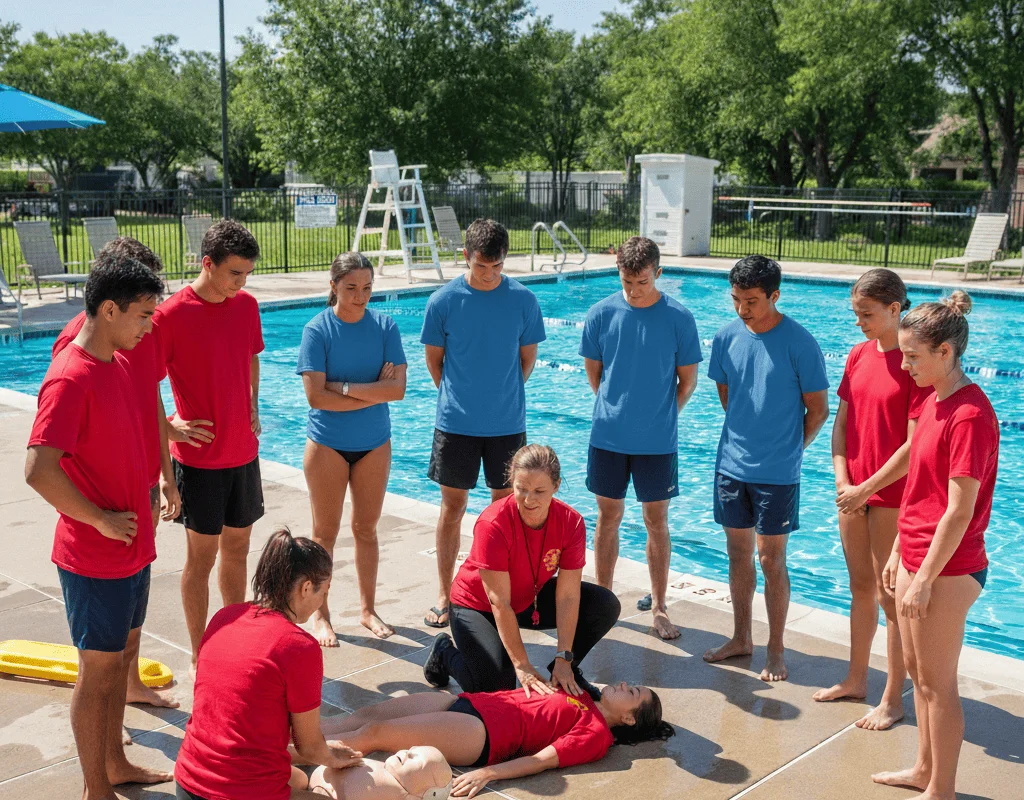
In real-world training environments, physical skill performance reveals gaps that written tests never show. What most students struggle with is maintaining effective scanning under fatigue while preparing for rapid response.
Employers routinely verify that candidates completed hands-on assessments. If a program cannot document in-person evaluation, facilities may refuse acceptance regardless of certificates presented.
Prerequisites candidates often overlook
Many applicants misunderstand what a lifeguard job description implies before training begins. Facilities may require swim tests, timed endurance swims, brick retrievals, and treading water without hands. Failure at this stage ends eligibility regardless of interest.
How long is certification valid?
Certification validity typically spans a fixed period, after which renewal is required to remain employable. Employers track expiration dates closely due to liability exposure. This is why Lifeguard Certification should be hyperlinked when explaining initial qualification pathways.
What does recertification involve?
Recertification focuses on skill retention, updated protocols, and performance verification. Lapsed credentials often require full retraining rather than a short renewal. When discussing renewal pathways, Lifeguard Recertification Online should be hyperlinked so readers can review requirements directly.
What do employers require before accepting lifeguard training?
From an employer review standpoint, acceptance hinges on three factors: documented hands-on training, alignment with current safety standards, and demonstrated competence during audits or drills. Facilities may reject credentials that lack transparency or practical assessment evidence.
How does proper hybrid training compare with industry minimums?
| Training Element | Proper Hybrid Training | Industry Minimum |
|---|---|---|
| Vigilance practice | Zone scanning under fatigue | Verbal explanation |
| Rescue scenarios | Multiple live simulations | Single demonstration |
| Emergency coordination | Team-based responses | Individual response |
| Skills documentation | Observed and recorded | Often unverified |
| Employer confidence | High | Variable |
What should a lifeguard job readiness checklist include?
- Confirm age and swim prerequisites with the hiring facility
- Verify training includes in-person skills verification
- Complete CPR and first aid training aligned with emergency response coordination
- Pass endurance, rescue, and vigilance evaluations
- Review facility-specific emergency action plans
- Track certification expiration and renewal timelines
Common misconceptions applicants have
Many assume the lifeguard job description is limited to poolside observation. In practice, lifeguards act as safety professionals responsible for prevention, intervention, and coordinated response under stress.
Another misconception is that all certifications are equal. Employers differentiate sharply based on training depth and verification.
Frequently Asked Questions
What is a lifeguard job description?
A lifeguard job description outlines the responsibility to prevent incidents, monitor swimmers, perform rescues, and provide emergency care. It emphasizes vigilance, rescue protocols, and coordination with emergency responders rather than passive supervision.
Is lifeguard training mostly physical?
Training combines physical skills with judgment and communication. While swimming and rescues are essential, scanning techniques, decision-making, and emergency response coordination are equally important during real incidents.
Do employers accept online-only lifeguard training?
Most employers require in-person skills verification. Programs that lack documented physical assessment are often rejected due to liability and safety concerns.
How often must lifeguards renew certification?
Renewal cycles are fixed and enforced by employers. Expired credentials typically require retraining to confirm skill retention and updated emergency procedures.
What skills do new lifeguards struggle with most?
Many struggle with maintaining vigilance over long shifts and recognizing subtle submersion signs early enough to prevent escalation.
Are lifeguards responsible for water chemistry?
Basic awareness may be required, but primary responsibility depends on the facility. Lifeguards must still report unsafe conditions immediately.
Why do employers audit lifeguard skills?
Audits confirm readiness, compliance with safety guidance, and effective emergency response capability under realistic conditions.
Is prior experience required to become a lifeguard?
Experience helps, but employers focus on verified training, physical readiness, and demonstrated competence rather than prior job history alone.
Conclusion
The lifeguard job description reflects a safety-critical role requiring vigilance, physical readiness, and sound judgment. Applicants who understand employer expectations, certification limits, and hands-on requirements are more likely to succeed and be hired.
Before applying, review the lifeguard job description carefully, confirm acceptance standards with the facility, and ensure training includes in-person evaluation. This preparation protects patrons, employers, and the lifeguard alike.
Reviewed by Jackie Stern, Lifeguard Instructor, Firefighter and EMT. Jackie Stern has taught lifeguarding for more than 20 years and works as a firefighter, EMT and swim instructor. She reviews course content, prerequisites and rescue standards against current certification requirements.
About Us
We are a nonprofit that trains and certifies in Lifeguarding, Waterfront Lifeguarding, Junior Lifeguarding, Shallow Pool Lifeguarding, Sexual Harassment Training, CPR/AED, CPR for Lifeguards, First Aid Emergency Oxygen, and swimming lessons.
© Copyright American Aquatics and Safety Training. All Rights Reserved