Mon - Sat: 8:30-18:00

Last updated
Lifeguard Class in California runs as a blended course, with online coursework followed by in-person water skills sessions.
Lifeguard certification in California at a glance
Expect $195.00 as the starting price for California, covering 7.5 hours online and 2 in-person days, with a minimum age of 15 and a continuous 300 yard swim.
- Cost
- Starting at $195.00 per participant, with group discounts available.
- Course length
- 7.5 hours of online training plus 2 days in person.
- Minimum age
- Be at least 15 years old by the last day of class.
- Swim test
- Swim 300 continuous yards (front crawl and breaststroke), tread 2 minutes using legs only, then retrieve a 10-lb brick from 7 to 10 feet and swim it back in under 1 minute, 40 seconds.
- Certifications
- Lifeguarding, CPR/AED for the Professional Rescuer, and First Aid.
- Valid for
- Two years from the date of issue. Recertification is 10 hours of in-person training.
- Format
- Blended: online coursework completed at your own pace, then in-person skills sessions in California.
Training a team, camp or pool staff together? See group lifeguard training.
CPR, BLS or first aid for a group in California? An AAST instructor can teach it at your site: see CPR training in California.

Beach Lifeguards
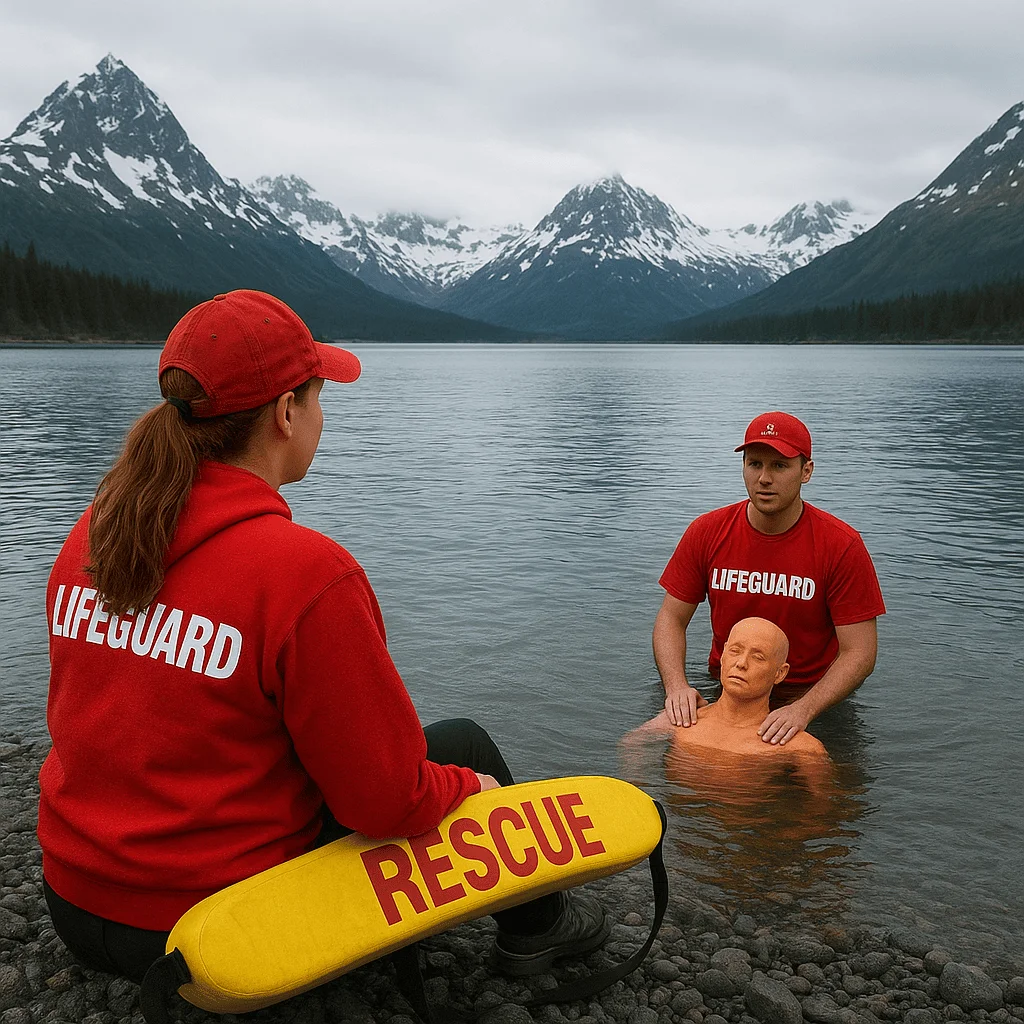
Beaches, lakes and waterfront parks across California hire lifeguards to supervise open-water swimming areas.

Pool Lifeguards
Country clubs, community pools, and apartment complexes hire certified guards seasonally.

Swim School & YMCA Lifeguards
Ongoing employment in Birmingham, Montgomery, and Mobile.

Junior Lifeguard Programs
A great first step for teens looking to prepare for future employment.

When does California pool staffing law require a lifeguard?
Whether a pool in California has to have a lifeguard on duty is decided by the state, not by the training provider. The rules are set by California Department of Public Health under Health and Safety Code §§116028 and 116045. These are the provisions that decide it most often:
- Lifeguard service is required at any public pool of wholly artificial construction where a direct fee is charged for its use.
- At every other public pool the operator must either provide lifeguard service or post signs clearly stating that it is not provided.
- A lifeguard on duty may have no duties other than supervising the safety of people taking part in water-contact activities.
- Pools that fall under the lifeguard requirement must also have an automated external defibrillator on site.
- Where a public agency cannot meet its staffing levels it may use lifeguard personnel from an agency certified by the United States Lifesaving Association, for a period of no more than 12 months, on a resolution of its legislative body.
Employers are the ones held to these rules, so a facility manager staffing a season in California should read them alongside the certification requirements rather than assume the two are the same thing.
Source: California Department of Public Health. Rules change, and some counties and cities add their own on top, confirm the current text with the agency before relying on it.
Where do lifeguards work in California?
Public mapping records 1,366 named aquatic facilities across 52 counties in California: 646 public pools and swim clubs, 449 beaches and open-water sites, 180 community and club pools, 46 water parks and 45 other venues. That is a genuine mix of pool and open-water sites in California.
Named facilities in California
- Leo Carrillo State Beach, Los Angeles County
- Redondo Beach State Park, Los Angeles County
- Little Corona Del Mar Beach, Orange County
- Corona del Mar State Beach, Orange County
- Torrey Pines City Beach, San Diego County
- La Jolla Shores Beach, San Diego County
- Del Valle East Beach Swimming Area, Alameda County
- Del Valle West Beach Swimming Area, Alameda County
- Keller Beach Swimming Area, Contra Costa County
- Lake Anza Swimming Area, Contra Costa County
Counties in California with the most aquatic facilities
Lifeguard class in California: local questions
How do I get lifeguard certified in California?
Register for the blended certification course, complete the online modules, then attend the in-person session covering the swim test, water rescue skills, CPR/AED for the Professional Rescuer and First Aid. The course starts at $195.00 and the certification is valid for 2 years.
Which parts of California is training available in?
Certification is open to candidates in all 58 counties in California. The counties with the most recorded aquatic facilities are Los Angeles County, Orange County and San Diego County.
Is lifeguard work in California mostly pools or open water?
Both. The recorded venues in California split between pools and open water. That reading comes from the 1,366 aquatic venues recorded across 52 counties in California.
What are the swim prerequisites?
A 300-yard continuous swim, 2 minutes treading water using legs only, and a timed retrieval of a 10-pound brick from 7 to 10 feet of water. These are tested at the start of the in-person session.
How long does certification last in California?
Two years from the completion date. Recertification is shorter than the initial course, so renew before your certification lapses.
Is the certification recognized outside California?
Yes. The certification is approved in almost every state in the US and CMAHC approved, so it remains valid if you take a lifeguard position in another state. Individual employers may still require an orientation or a site-specific skills check.
Facility data © OpenStreetMap contributors, ODbL.
What students say
4.8 out of 5 ★★★★½ from 336 verified students who completed a course with us.
- ★★★★★
We felt really prepared
Shneur Zalman L., August 2022 - ★★★★★
Learned a lot new things, taught very well
Dylan W., July 2022 - ★★★★★
Awesome course
Sean G., July 2022 - ★★★★★
Course was fun, and there is a lot to be learned.
Aidan F., July 2022 - ★★★★★
Course was very enjoyable to learn
James C., July 2022 - ★★★★★
Very repetitive but overall good
Christian D., July 2022
What should I know about lifeguard certification in California?
- You must be 15 by the last day of class. Age is measured on the closing day of the class, not at booking, which means turning 15 during the course is acceptable. Individual employers often ask for more: 16 at many pools, older at some beaches.
- The swim test comes before the course, not after. You must swim 300 yards continuously, tread water for two minutes without using your arms, and retrieve a 10-pound object from 7 to 10 feet. This is the step candidates actually fail. The course builds rescue skill on top of swimming ability you already have.
- It is three certifications in one. Lifeguarding, CPR/AED for the Professional Rescuer covering adult, child and infant, and First Aid. Aquatic employers usually ask for all three, which is why they are taught and assessed together rather than sold separately.
- It takes 26.5 hours in total, split between online study and in-person days. About 7.5 hours of online coursework at your own pace, then two days in person for water rescue, spinal management and the skills assessment. The in-person part cannot be done remotely.
- Certification starts at $195 and covers everything. The online modules, the in-person skills assessment and the certificate itself. Group discounts are available for schools, camps and employers booking several places.
- The certificate lasts two years and is verifiable. Every certificate is issued with an ID and a QR code for online verification, so employers need not contact us. Renewal is a shorter course, about 10 hours in person, when your certification has not been expired for long.
- Where you can work in California. Municipal and community pools, waterparks, school and college aquatic centers, summer camps, hotel and resort pools, and waterfront patrols. Demand is highest ahead of the summer season.
Reviewed by Jackie Stern, Lifeguard Instructor, Firefighter and EMT. Jackie Stern has taught lifeguarding for more than 20 years and works as a firefighter, EMT and swim instructor. She reviews course content, prerequisites and rescue standards against current certification requirements.