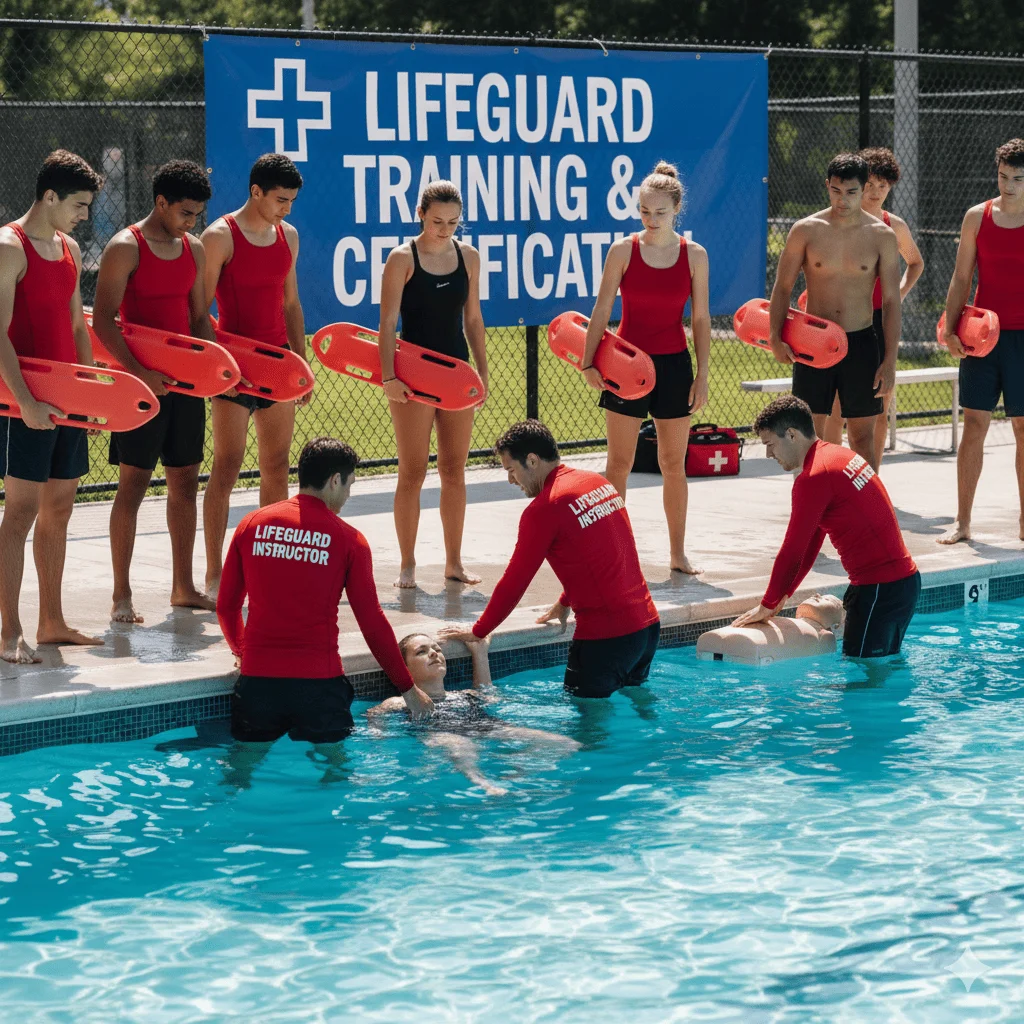
Lifeguard Training in Canada

Last updated

Lifeguard Training in Canada runs as a blended course, with online coursework followed by in-person water skills sessions.

How much does lifeguard certification cost in Canada?

Certification for Canada begins at $195.00 and runs 7.5 hours online plus 2 days in person. Qualifying means being at least 15 and swimming 300 yards continuously.

Cost
Starting at $195.00 per participant, with group discounts available.
Course length
7.5 hours of online training plus 2 days in person.
Minimum age
Be at least 15 years old by the last day of class.
Swim test
Swim 300 continuous yards (front crawl and breaststroke), tread 2 minutes using legs only, then retrieve a 10-lb brick from 7 to 10 feet and swim it back in under 1 minute, 40 seconds.
Certifications
Lifeguarding, CPR/AED for the Professional Rescuer, and First Aid.
Valid for
Lifeguarding and First Aid: two years from the date of issue. CPR/AED for the Professional Rescuer: one year. Recertification is 10 hours of in-person training.
Format
Blended: online coursework completed at your own pace, then in-person skills sessions available on request in Canada.
See Course Dates

Who offers lifeguard training and certification in Canada?

Lifeguard Career with Lifeguard Training in Canada
If lifeguard training in Canada is what you need, American Aquatics and Safety Training provides credentials, approved in almost every state in the US and CMAHC approved, geared to pool, camp, waterpark and beach work.
Our program combines 26.5 hours of classroom and in-water instruction so you finish fully prepared for emergencies, holding certification approved in almost every state in the US and CMAHC approved. Whether you’re looking for your first lifeguard certification training in Canada or need recertification, we have courses to fit your schedule.
Lifeguard Training in Canada: lifeguard training certification classes

American Aquatics and Safety Training is approved in almost every state in the US and CMAHC approved, providing lifeguard training and lifeguard certification programs. Our courses, including CPR, AED, and First Aid training, are designed to meet the highest standards in aquatic safety and emergency preparedness.


We follow the guidelines of the CDC Healthy Swimming program, as well as standards recognized by the U.S. Department of Labor and the U.S. General Services Administration (GSA), so that scope and quality remain comparable to the other leading national providers. Since the early 2,000’s, we have ensured that all of our lifeguard training and safety courses comply with Occupational Safety and Health Administration (OSHA) requirements, giving both employers and participants confidence that our certifications support workplace safety, legal compliance, and professional excellence.

In addition, American Aquatics and Safety Training is approved by the Council for the Model Aquatic Health Code (CMAHC), which is supported by the Centers for Disease Control and Prevention (CDC). The CMAHC produces science-based standards for aquatic health and safety, which inform national guidance on drowning prevention, waterborne disease control and risk reduction at pools and aquatic facilities. Being CMAHC-approved means that our lifeguard training programs adhere to evidence-based best practices in line with CDC recommendations, which is a further reason organisations, employers and individuals can rely on the certification.

Why Take Lifeguard Classes in Canada with Us?

Lifeguard Jobs in Canada: Launch Your Career

Are you searching for lifeguard jobs in Canada? Demand for certified guards runs in many countries across municipal and YMCA pools, swim schools, summer camps and waterfront patrols. Canada employers offer seasonal, part-time, and year-round opportunities with pay ranging from $15 to $21 per hour, depending on location and experience.
Some of the most common lifeguard job opportunities in Canada include:
Lifeguard Training in Canada: Beach Lifeguards

Beach Lifeguards

Town and municipal beach patrols hire every summer.

Pool Lifeguards

Pool Lifeguards

Country clubs, community pools, and apartment complexes hire certified guards seasonally.

Swim School & YMCA Lifeguards

Swim School & YMCA Lifeguards

Ongoing employment at swim schools and YMCA pools.

Junior Lifeguard Programs

Junior Lifeguard Programs

A great first step for teens looking to prepare for future employment.

Ready to apply? Visit our guide to Summer lifeguard jobs for current requirements, hiring timelines, and application tips. Pair it with How to pass the lifeguard test in Canada to hit every benchmark with confidence.

Why Train With Lifeguard & Safety Training?

Certification Accepted by Canada Employers – Our credentials meet state and local requirements for both pool and open-water environments.

Job-Ready Skills

Includes CPR, AED, First Aid, and advanced rescue techniques.

Flexible Classes

Schedule options designed for students, part-time workers, and seasonal hires.

Direct Path to Employment

We align our training with what Canada lifeguard employers are looking for.

Lifeguard training certification classes in Lifeguard Training in Canada

Canada Specific Hiring & Career Pathways

Our students have gone on to secure lifeguard jobs at:

State Parks & Beaches

Including Canada State Parks and municipal beach patrols.

YMCA of Canada

Multiple branches hiring certified lifeguards.

Private Pools & Clubs

Such as DuPont Country Club and apartment complexes statewide.

Swim Schools & Camps

Year-round opportunities in youth aquatics.

Aiming for beach patrol or a steady pool role? Our course prepares you for both, and our pages on Canada pool safety laws and test prep give you an edge during interviews and on day one.

What are the requirements for lifeguard certification in Canada?

To enroll in lifeguard certification classes in Canada, participants must meet these requirements:

What will I learn in lifeguard training in Canada?

Our Canada lifeguard certification course teaches the rescue, prevention, and emergency skills you need to work confidently as a professional lifeguard.

Rescue Techniques You’ll Master

Head, Neck & Spinal Management

Final Skill Scenarios

Every candidate in our Canada lifeguard classes must successfully complete:

What are the next steps after lifeguard certification in Canada?

After earning your lifeguard certification in Canada, advance your career with a Pool Activity Leader course. This program builds leadership, supervision, and program management skills, preparing you for higher-level roles at camps, schools, aquatic centers, and recreation facilities.

What types of lifeguard certifications are available in Canada?

Already certified? Contact us today to schedule your lifeguard recertification in Canada.

Where can I take lifeguard classes in Canada?

We also provide group lifeguard training in Canada for camps, schools, and organizations.

Who Hires Canada Lifeguards?

Certified lifeguards in Canada earn $16–$20 per hour, with higher wages at waterfronts.

What class schedules can I register for?

Class TypeDescription
WeekendWeekend lifeguard classes in Canada for fast certification
EveningEvening lifeguard training in Canada for students & professionals
PrivatePrivate lifeguard courses in Canada for schools, camps, or groups of 10+
Sign Up for Lifeguard Training in Canada Today

Student Reviews

Get Certified. Get Hired.
Canada employers open recruitment months in advance, which makes a summer start too late. Completing training in Canada beforehand leaves you ready when the season does begin.

Sign up today for a lifeguard training class to reserve your spot and begin your journey toward a rewarding lifeguarding career in Canada.

FAQs – Lifeguard Certification in Canada

Approximately 26.5 hours, typically completed in 3–4 days.

Tuition starts at $195, with group discounts available.

Yes, it’s accepted at pools, camps, and aquatic facilities throughout Canada.

The minimum age to become a lifeguard in Canada is 15 years old. Candidates must be at least 15 by the time they complete their lifeguard certification course from an approved provider such as American Aquatics and Safety Training (AAST). This is the entry age for the course, not a hiring rule, since each employer decides the minimum age it accepts for pool work. Where beach or open-water lifeguard roles exist, they often require applicants to be at least 16, because open-water rescues are more physically demanding. Starting at age 15 allows you to gain experience early, build leadership skills, and qualify for summer lifeguard jobs in Canada before high school graduation.

Conclusion
Start Lifeguard Training in Canada Today
Progress your aquatic career through American Aquatics and Safety Training. The Canada classes cover the skills, build the confidence, and issue the certification employers look for.
Training with American Aquatics and Safety Training for certification in Canada means expert instruction, hands-on practice and credentials, approved in almost every state in the US and CMAHC approved, that lead to real job opportunities. Whether you’re preparing for a summer job, a career in aquatics, or simply want to gain lifesaving skills, our lifeguard classes in Canada provide the training and confidence you need to succeed.

Lifeguard training in other countries

We run the same certification course in these countries too.

What should I know about lifeguard certification from Canada?

  1. You must be 15 by the last day of class. Age is measured on the closing day of the class, not at booking, which means turning 15 during the course is acceptable. Individual employers often ask for more: 16 at many pools, older at some beaches.
  2. The swim test comes before the course, not after. You must swim 300 yards continuously, tread water for two minutes without using your arms, and retrieve a 10-pound object from 7 to 10 feet. This is the step candidates actually fail. The course builds rescue skill on top of swimming ability you already have.
  3. It is three certifications in one. Lifeguarding, CPR/AED for the Professional Rescuer covering adult, child and infant, and First Aid. Aquatic employers usually ask for all three, which is why they are taught and assessed together rather than sold separately.
  4. It takes 26.5 hours in total, split between online study and in-person days. About 7.5 hours of online coursework, completed from Canada whenever suits you, followed by in-person water skills sessions. The practical assessment is always face to face with an instructor and takes place in the United States.
  5. Certification starts at $195 and covers everything. The online modules, the in-person skills assessment and the certificate itself. Group discounts are available for schools, camps and employers booking several places.
  6. The lifeguarding and First Aid certificates last two years, the CPR/AED certificate one year, and all are verifiable. Each certificate includes an ID and QR code, making employer verification instant and online. Renewal is a shorter course of about 10 hours in person, provided your certification has not been expired for long.
  7. Where the certification is recognized. Issued by American Aquatics and Safety Training, the certification is recognised across the United States. International requirements vary by employer, so verify with the facility you intend to work at first.

Reviewed by Jackie Stern, Lifeguard Instructor, Firefighter and EMT. Jackie Stern has taught lifeguarding for more than 20 years and works as a firefighter, EMT and swim instructor. She reviews course content, prerequisites and rescue standards against current certification requirements.

American Aquatics and Safety Training, Inc. is a 501(c)(3) nonprofit organization. Tax ID (EIN) 83-4426661.

70 E. Sunrise Highway, Suite 500, Valley Stream, NY 11581

About our organization

This site is protected by reCAPTCHA and the Google Privacy Policy and Terms of Service apply.